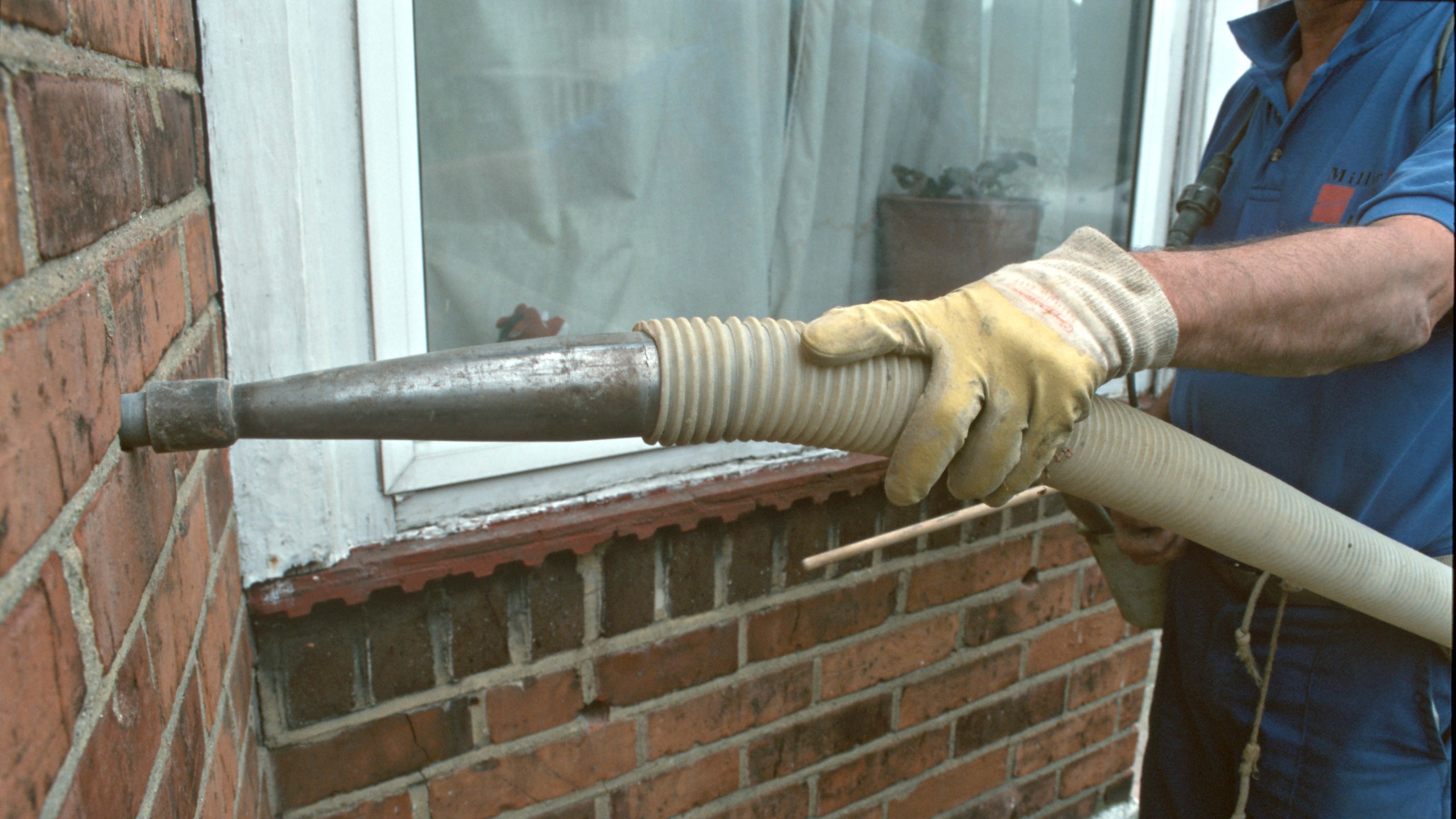
Introduction
What is it?
What are the Warranty providers concerns?
Warranty stance
What Developers should action after reading this document?
Thermal insulation shall be specified correctly and installed to avoid damp and interstitial condensation issues occurring within the wall makeup. The proposed use shall meet the requirements of relevant Building Regulations – notably in relation to the thermal performance of the wall and applicable building heights. [SW1]
The Developers design team and specifiers must ensure that where blown-in cavity wall insulation is proposed it has an appropriate third-party product conformity certificate. The certificate should be reviewed to ensure the proposed use is within the intended scope.
For Warranty, blown-in cavity insulation is only permitted on traditional masonry cavity walls e.g. brick and block.
When specifications are being created, the specifier should ensure that the manufacturer of the blown-in cavity wall insulation operates an approved installer scheme where the installers are approved, registered and regularly reviewed to demonstrate they are competent to carry out installations of the product in accordance with the third-party product conformity certificate.
Any appointed approved installers must follow the guidance provided within the third-party product conformity certificate, and any supplementary supporting guidance issued by the product manufacturer.
The Developers design team and specifiers should complete important checks during the design phase to establish important points prior to selecting any material using guidance within the ‘External Walls’ section of our Technical Manual. Key areas should be addressed, such as:
Exposure category - where blown-in cavity wall insulation is proposed, it should be suitable for the wind-driven rain exposure of the site.
Material type - the blown-in insulation can be made from various materials, with the most common being mineral wool and polystyrene beads. It should be noted that certain exposure categories and cavity width situations are not suitable for the use of Urea Formaldehyde Foam (UF foam) blown-in cavity wall insulation.
Cavity widths - blown-in cavity wall insulation products can only be used in certain cavity widths, and it is important the product you choose is suitable for the specific cavity arrangement and width, and the external masonry type you have.
Mortar joint type - the profile selected for the mortar joints must be carefully considered - raked or recessed mortar joints should be avoided in areas of very severe exposure.
Compatibility - Blown-in cavity insulation products must not impair the functionality of critical components within the wall cavity, such as cavity barriers and cavity trays. Designers should consult the third-party product conformity certificates for both the insulation and the relevant cavity components to ensure compatibility is achieved and functionality remains.
The Developers site teams must operate suitable quality assurance (QA) procedures for blown insulation works. The QA procedure should include:
Accurate records of approved installers – site teams should record the evidence of each approved installer operative on their site. The information should be made available to the Warranty Surveyor on request.
Material storage requirements – Specialist materials such as bonding agents are temperature sensitive and their performance impacted by extreme or fluctuating temperatures. Blown-in insulation materials shall be stored in line with the manufacturers requirements and where required, stored in protected temperature-controlled environments that protect materials from the effects of freezing or elevated temperatures.
Working condition requirements – any structure having blown-in insulation should be complete with a weathertight roof and appropriately covered in. Check the manufacturer's guidelines for optimal temperature and humidity conditions during installation as extreme temperatures or high humidity can affect the performance and settling of the insulation.
Method statements for installation – to ensure a clear, step-by-step installation approach is established on site and adequately supports periodic work inspection by the site team throughout the project. Critical points of inspection should include but not be limited to:
- Execution of drill patterns - Drill patterns to facilitate points of injection into the cavity should be site specific. The drill pattern must be provided by the product manufacturer and must be followed. Points of injection should ensure full and even filling of the cavity is achieved – areas at heightened risk of obstruction to distribution of the material in the cavity should be identified and monitored e.g. around cavity trays, areas under lintel or beam bearings, and behind inset meter boxes.
- Closing of cavities and penetrations - Works should only proceed once the cavity wall is fully sealed e.g. closed at the head and edges of cavities, around window and door openings. Penetrations from pipes, cables and structural members should also be checked.
- Prevention of blockages/obstructions - Ventilation openings for combustion air or under floor ventilation should be protected to prevent blockage by the insulant. Similarly, weep holes within the external leaf should not be blocked on completion of blown-in insulation work. Where blown-in cavity wall insulation is specified for rendered walls, weep holes are still required as per the requirements of our Technical Manual
The Developers site team's quality assurance (QA) procedures for blown-insulation works should include appropriate post-completion checks. These checks should include but not be limited to:
Distribution of material checks – Checking that cavities are fully filled at completion is critical. Physical observation, inspection notes, and appropriate photographic evidence of work as it progresses and at completion should form part of the site records. Thermal imaging surveys of completed installations can also be a useful tool once the building has an operational heating system and it is advisable to include this within completion inspections.
The Warranty surveyor at their discretion may request a thermal imaging survey is carried out if site records are insufficient to prove and demonstrate correct workmanship, or doubts around installations are/have been raised during or post site inspections.
Blockage/obstruction checks - Where the development includes chimneys, flues and air vents (including those for the sub-floor void) there should be consideration for an appropriate test (e.g. smoke test) to ensure the chimneys/flues, vents remain clear and unobstructed on completion.
On completion, evidence that the works have been completed by a competent person should be recorded into the site quality assurance information.
All completion documents issued by the installing approved contractor shall be made available to the Warranty Surveyor.
Subscribe to be first to hear about our technical updates
Download a PDF version of this article
Disclaimer
This technical document has been prepared by Premier Guarantee exclusively for the benefit of our registered customers. Its sole purpose is to provide guidance on the utilisation and interpretation of technical requirements pertinent to the warranty cover offered by Premier Guarantee.
Please note that this document is not intended for circulation or use beyond the aforementioned purpose. The information presented herein is for general guidance only and does not constitute professional advice. Registered customers and any other party accessing this document are advised not to rely solely on the information contained within.
Nothing in this document is intended to establish, nor should it be construed as creating, any contractual or legal obligations. In the event that any third party chooses to rely on the information provided, they do so entirely at their own risk. Premier Guarantee explicitly disclaims any duty of care or liability that may arise from the use of or reliance on this document by any third party, howsoever arising.
properties.trackTitle
properties.trackSubtitle